Choose the best climbing shoes for you.
Introduction
A Quick Story from Real Life
When we were choosing software for our climbing gym to manage guests, I remember hearing this question:
"How do you know someone is really using a particular software?"
"They'll complain about it." Because when you truly use something, you want it to be perfectly suited to your needs.
Climbing shoes are a deeply personal choice. Just like when choosing software for a climbing gym, once you start talking to real users, you quickly realize there are always both satisfied and dissatisfied opinions. Some people love one option, while others prefer something completely different. What works perfectly for one person may feel terrible for another.
You only know if a pair is right for you after trying it on and testing it in real conditions. Sometimes it takes months, sometimes years, to understand what actually works for your feet, your climbing style, and your goals.
In this guide, I approach the selection process from two angles:
What to choose
What to avoid
With so many options available, decision-making can be overwhelming. But when you know exactly what doesn't work for you, your brain has more capacity to focus on making the right choice.
Contents
So, here's my take on choosing climbing shoes.
1. Purpose
The first and most important thing is to decide what you need them for: gym, bouldering, outdoor climbing, multi-pitch, or a mix. This determines the rubber, shape, and even size you will need.
If the shoe does not match your real use case, everything else becomes harder to judge. A pair that feels amazing on steep indoor terrain may not be the pair you want for long outdoor routes, multi-pitch days, or all-day climbing.
2. Budget
How much are you ready to spend? You walk into a store and see prices ranging from about $80 to over $230. The big question is simple: is it worth paying more, or can you save some cash?
Prices shift depending on country, brand, and sales, but as of April 5, 2026 these rough ranges are a lot closer to what you actually see on the market.
Budget Shoes ($80-130)
Great for beginners, gym training, or anyone who does not want to wear out expensive shoes too quickly.
Examples: La Sportiva Tarantula, Scarpa Origin, Black Diamond Momentum.
Mid-Range ($130-180)
Better materials, improved fit, and stickier rubber. A smart choice if entry-level shoes are starting to hold you back.
Examples: La Sportiva Finale, Scarpa Origin VS, Scarpa Veloce.
High-End ($180-230+)
Premium materials, maximum precision, and more specialized performance for climbers who already know what they want.
Examples: La Sportiva Solution, Scarpa Instinct VS, Scarpa Drago.
I recommend budget climbing shoes if you are just starting out and the price difference between $100 and $150 matters to you.
If you are committed to improving and want better results, a mid-range shoe with a more precise fit and better materials will usually be the best choice.
For those climbing for over a year, it may be time to move to the high-end segment if you know exactly what kind of fit and performance you are looking for.
3. Look and Feel
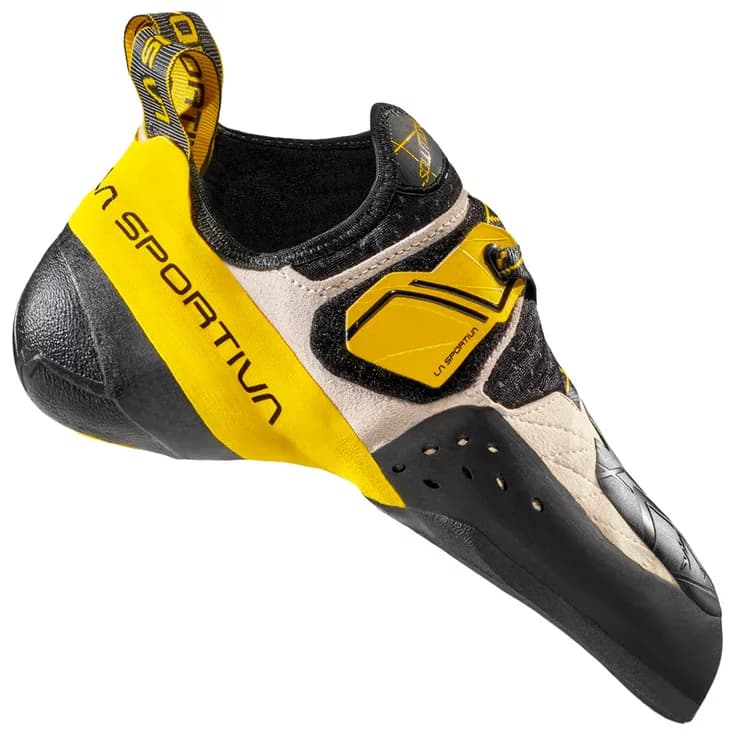
For me, look and color matter. It is about personal confidence and how you feel wearing them. That is obviously personal, and not everyone will agree.
For example, I really like the look of the La Sportiva Solution Classics. But I also realized recently that they just do not fit my foot shape well. The toe box does not let me use my toe effectively, and the heel feels wrong for me. Still, they hold my foot well and are great for outdoor climbing.
So yes, look and feel are personal. But there is also a practical point here: why even try on shoes that you already know you do not like if there are other good models that might fit both your foot and your taste?
4. Size and Comfort
At first glance, this seems simple: climbing shoes should feel like a second skin. They should fit snugly, the heel should not slip, and nothing should create sharp pressure when you stand on small footholds.
But before going further, it is worth stopping at one of the most common myths: climbing shoes must be several sizes smaller than your regular shoes.
Honestly, I see the same situation all the time. Someone buys a very small pair right away, then suffers in them, complains about the shoes, and ends up getting neither enjoyment nor good performance on the wall.
In my opinion, aggressive downsizing often comes from choosing the wrong model in the first place. Size alone means very little if you do not consider the shape of the shoe. If a model is built for a wider foot and your foot is narrow, you may start going down in size just to remove empty space and make the shoe feel tighter. That does not always lead to a better fit.
That is why you cannot rely only on the number on the box. Fit can vary a lot between brands, between models, and even between different lines within the same brand.
For example, I have a narrow foot with a length of 27.5 cm, and I wear La Sportiva Solution in 40.5, La Sportiva Miura VS in 41, and Scarpa VSR in 42.
Focus less on how much you downsize and more on how a specific model fits your actual foot. Good climbing shoes are not the ones that cause the most pain. Good climbing shoes are the ones that give you precision, support, and control.
Yes, your toes will usually be bent in climbing shoes. But there is a big difference between a strong, functional position and a position where the toes are curled so aggressively that the shoe stops helping and starts getting in the way. From my experience, overly curled toes can even reduce effectiveness in certain movements, including toe hooks.
Most importantly, climbing shoes should be evaluated in movement, not just while standing in a shop. It is one thing to put them on and feel that they are very tight. It is something completely different to understand how they perform on footholds, how the heel holds, how the toe works, and how confidently you actually climb in them.
And probably the most important point is this: you only truly understand your climbing shoes over time. Not in five minutes of trying them on, and not by looking at the size number, but through practice, comparison, and real experience on the wall and on rock.
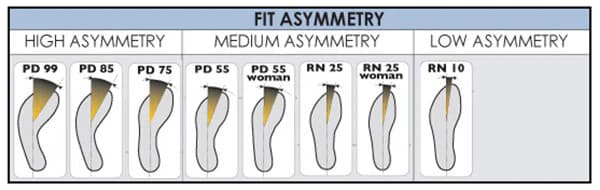
5. Fit and Asymmetry
The level of asymmetry and downturn matters. If you have been climbing for more than a year, you can start trying more aggressive shapes that better suit your style.
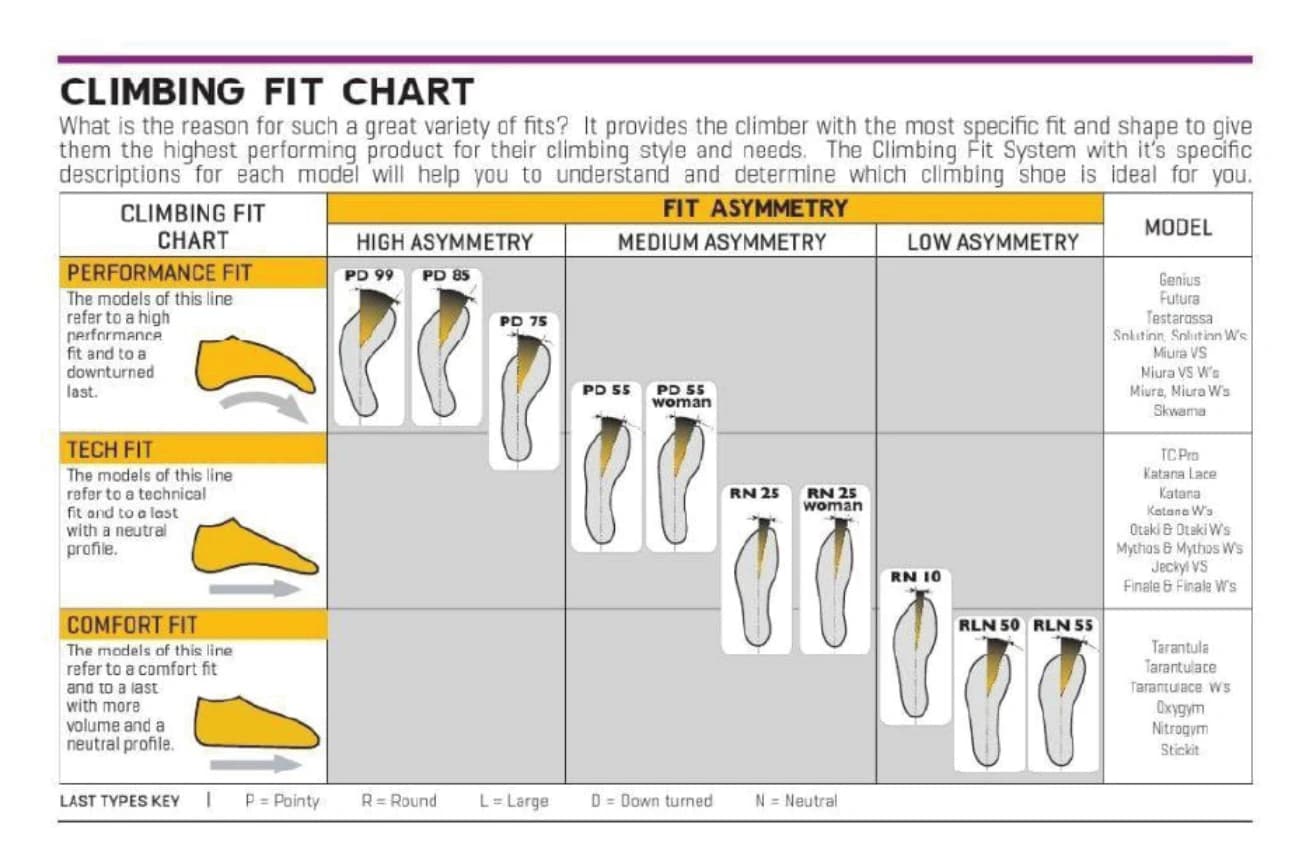
Comfort Fit
Toes have space, compression is minimal, and it works well for long multi-pitch routes, trad climbing, and gym training.
Technical Fit
Snug fit, slightly curled toes, and the best balance between comfort and power. This is often the strongest all-around option.
Performance Fit
Tightest fit, aggressively curled toes, and maximum power transfer to tiny footholds. Best for hard bouldering and sport climbing.
For beginners, I recommend sticking with more technical models that are still comfortable, like the La Sportiva Katana. They offer a good balance of comfort and support, help your technique improve by putting more emphasis on your feet, and take pressure off your hands. They are more expensive, though, which may be a dealbreaker for some.
6. Closure
Velcro, laces, or slip-on? My first climbing shoes were La Sportiva Cobras, slip-ons with an elastic band. I only used them outdoors. I bought them as a first-year student because they fit my feet out of a limited store selection and were within my budget.
As a beginner, I loved them. They were soft, easy to put on, and comfortable. But as I broke them in and improved my technique, the heel started slipping, which was a big downside.
Now, most of my shoes have Velcro. It is quick and usually holds well. Laces might allow a more precise fit, but that is not guaranteed.
As far as I am concerned, closure does not matter nearly as much as people sometimes make it sound. Once the shoe already fits the way you need, closure becomes more of a secondary detail.
7. Rubber
Rubber is one of the easiest places to get lost in details, so I prefer to bring it back to terrain and goals.
Indoor Climbing
- Soft and sticky rubber works well on volumes, flat holds, and dynamic moves.
- It usually gives better toe and heel hooking.
- The downside is faster wear, especially on rough plastic.
Outdoor Climbing
- Balanced softness and stiffness gives a mix of grip and support.
- It usually works better for small edges and technical climbing.
- The downside is that it can feel stiff if you are used to softer shoes.
Big Walls, Multi-Pitch, and Alpine Climbing
- Stiff and durable rubber is better for tiny edges and long routes.
- It maintains shape better and usually reduces foot fatigue.
- The downside is less stickiness on smooth surfaces.
Major Rubber Manufacturers in Climbing
Several major companies produce climbing shoe rubber, and each has its strengths.
- Vibram: balanced performance and still the industry standard for many climbers.
- Stealth: excellent grip, especially when maximum stickiness matters.
- RH / Mad Rock: a solid alternative, though not usually the top-tier benchmark.
- Trax / Evolv: good and usable, though not always the gold standard.
Which one is best?
It depends on your goals. There is no single best option.
| Brand | Common Rubber |
|---|---|
| La Sportiva | Vibram XS Grip, XS Grip 2, XS Edge, FriXion Black, FriXion White, FriXion Eco |
| Scarpa | Vibram XS Grip 2, XS Edge, M50 |
| Five Ten | Stealth C4, Mi6, HF, Phantom |
| Ocun | CAT 1.5, CAT 1.1, Vibram XS Grip |
| Evolv | Trax-SAS, Trax-XE, Trax-GT |
| Black Diamond | NeoFriction, BlackLabel-Fuse |
| Tenaya | Vibram XS Grip |
| Mad Rock | Science Friction 3.0, Science Friction R2 |
| Unparallel | Real Honor, RHX, VD |
| Butora | Neo Fuse, F5 |
| Boreal | Zenith, Zenith Pro |
| Red Chili | RX-1, RX-2, RX-3 |
| Rubber Name | Durability | Edging | Grip | Brand |
|---|---|---|---|---|
| Vibram XS Grip | 6 | 7 | 6 | La Sportiva |
| Vibram XS Grip 2 | 7 | 8 | 9 | La Sportiva |
| Vibram XS Edge | 9 | 10 | 6 | La Sportiva |
| FriXion Black | 5 | 5 | 8 | La Sportiva |
| FriXion Eco | 5 | 5 | 8 | La Sportiva |
| Cat 1.5 | 6 | 7 | 9 | Ocun |
| Cat 1.1 | 8 | 9 | 7 | Ocun |
| Stealth C4 | 5 | 8 | 9 | Five Ten |
| Stealth Mi6 | 4 | 5 | 10 | Five Ten |
| Stealth HF | 5 | 7 | 9 | Five Ten |
| Trax-SAS | 8 | 7 | 7 | Evolv |
| Trax-XE | 10 | 6 | 6 | Evolv |
| Trax-GT | 6 | 6 | 6 | Evolv |
| NeoFriction | 6 | 6 | 7 | Black Diamond |
| BlackLabel-Fuse | 7 | 8 | 6 | Black Diamond |
| Science Friction 3.0 | 7 | 6 | 8 | Mad Rock |
| Science Friction R2 | 8 | 7 | 8 | Mad Rock |
| Real Honor (RH) | 6 | 7 | 9 | Unparallel |
| RHX | 7 | 8 | 8 | Unparallel |
| VD | 6 | 7 | 7 | Unparallel |
| Neo Fuse | 7 | 7 | 8 | Butora |
| F5 | 8 | 8 | 7 | Butora |
| Daytona Rubber | 6 | 6 | 7 | EB |
| Zenith | 6 | 7 | 8 | Boreal |
| Zenith Pro | 7 | 8 | 9 | Boreal |
| RX-1 | 6 | 7 | 8 | Red Chili |
| RX-2 | 7 | 8 | 8 | Red Chili |
| RX-3 | 8 | 9 | 7 | Red Chili |
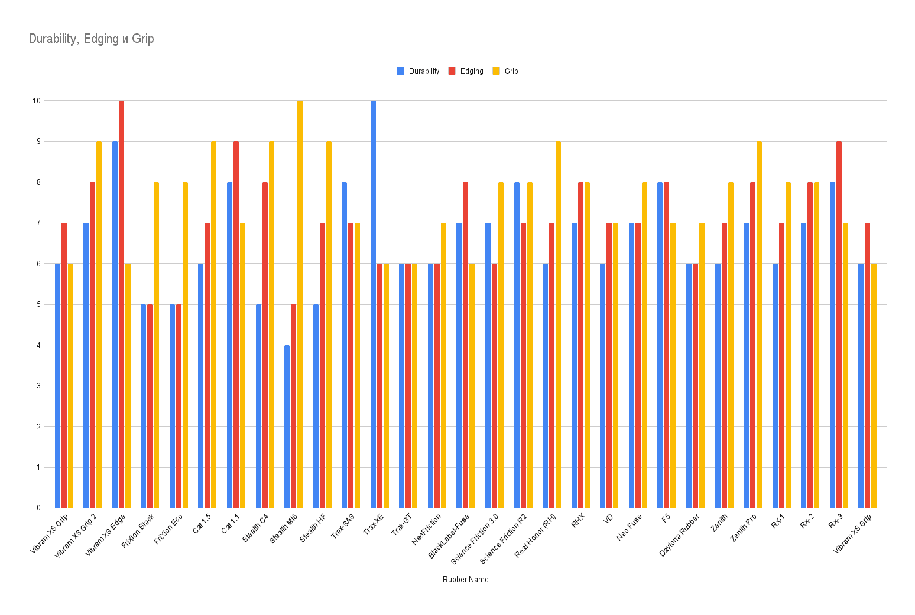
Tips
- Temperature: softer rubber usually performs better in cold conditions, stiffer rubber better in heat.
- Rubber thickness: thicker rubber lasts longer but reduces sensitivity.
- Friction climbing: stickier rubber is better for smearing on granite and smooth rock.
This kind of analysis will always contain some subjectivity. I have not personally compared every climbing shoe on the market. I climb mainly in La Sportiva and Scarpa, both of which use Vibram rubber, so naturally I trust it. But other brands also have loyal users, and the better choice still depends on your goals.
Personally, I have multiple pairs of climbing shoes, and each has its pros and cons. At the end of the day, try them on, test them if possible, and choose what works best for your climbing style, goals, and comfort.
8. Conclusion
Your practical algorithm for choosing climbing shoes:
- How will you use your climbing shoes: gym, outdoor sport climbing, bouldering, trad, big wall, or multi-pitch?
- What is your climbing level: beginner, intermediate, advanced, or competition climber?
- What is your budget: $70-100, $100-150, or $150+?
- Which brand's fit and style do you prefer?
- Do you need a soft shoe or a stiff shoe?
- What type of rubber best suits your needs?
If you want to improve faster, your shoes should support your technique rather than fight it. The right pair will not magically make you stronger, but it will help you use your feet more confidently and more precisely.
Brand Comparison Charts
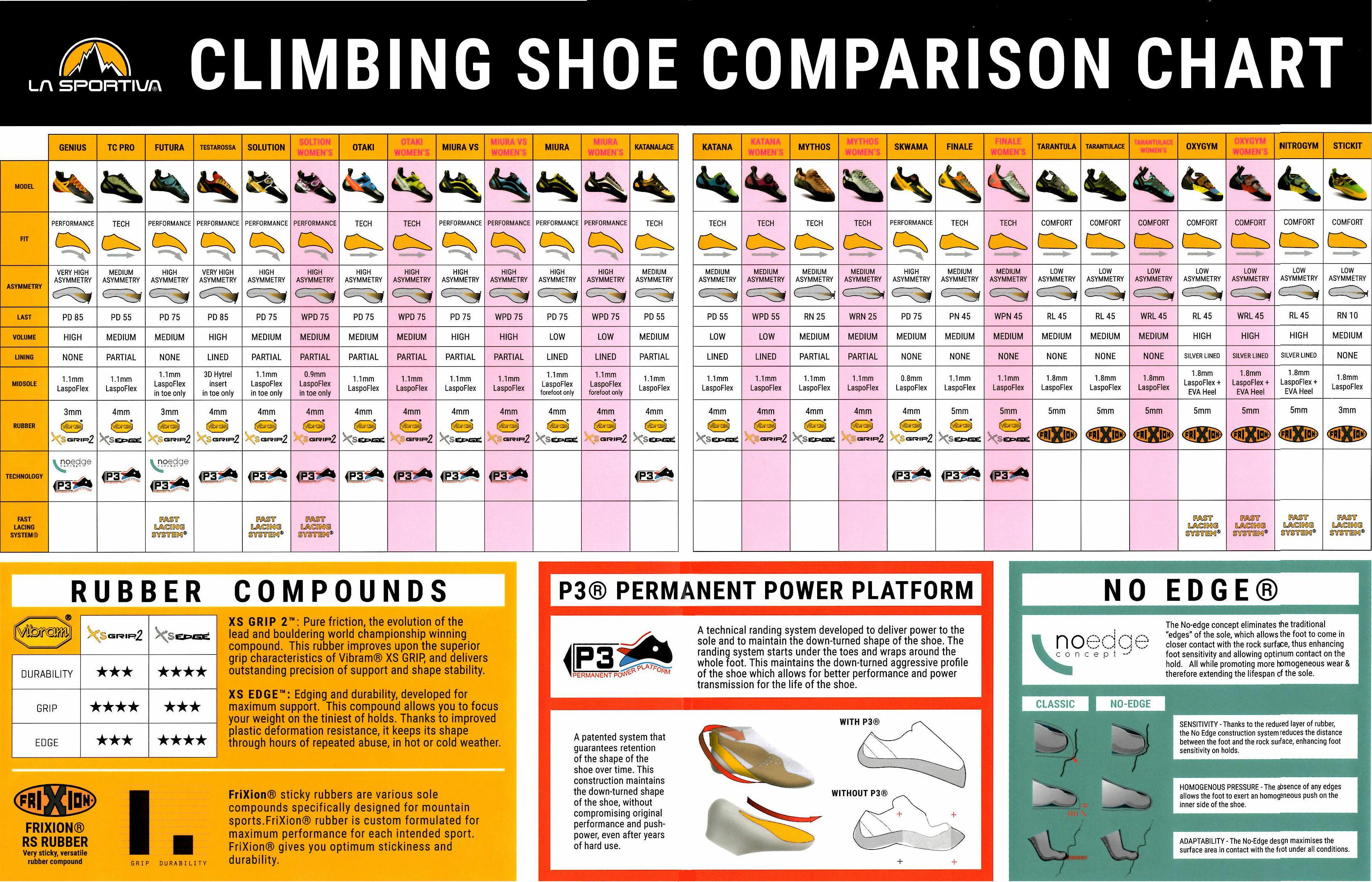
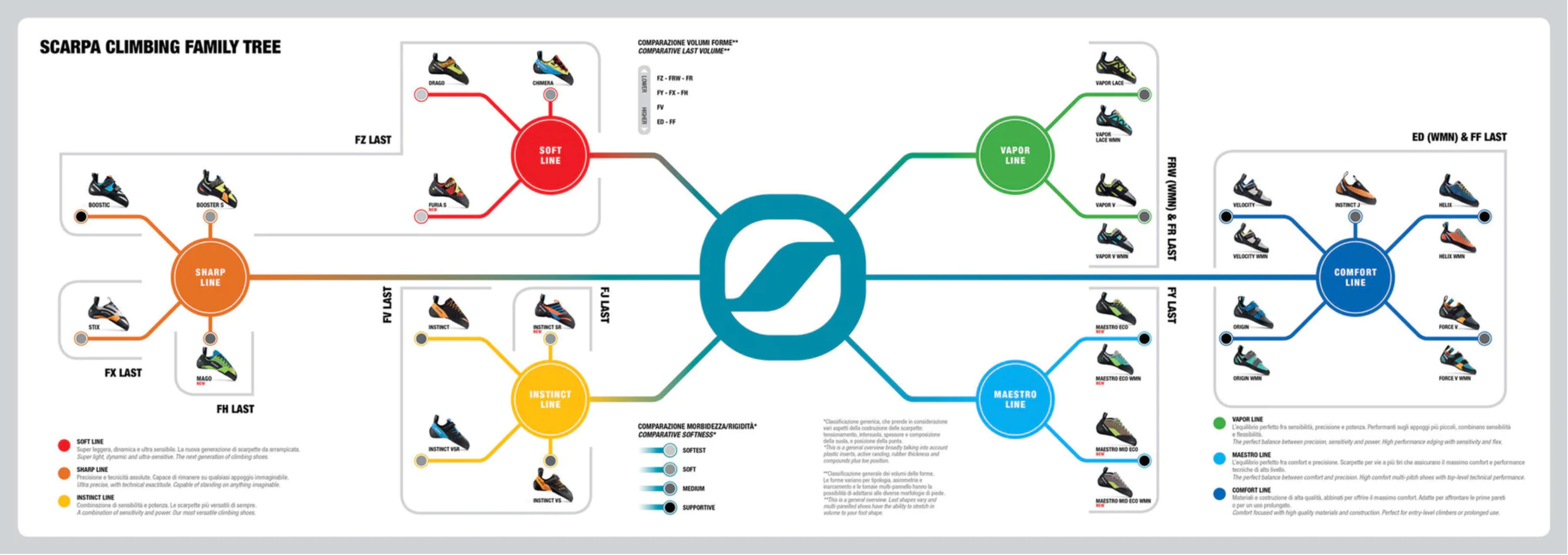
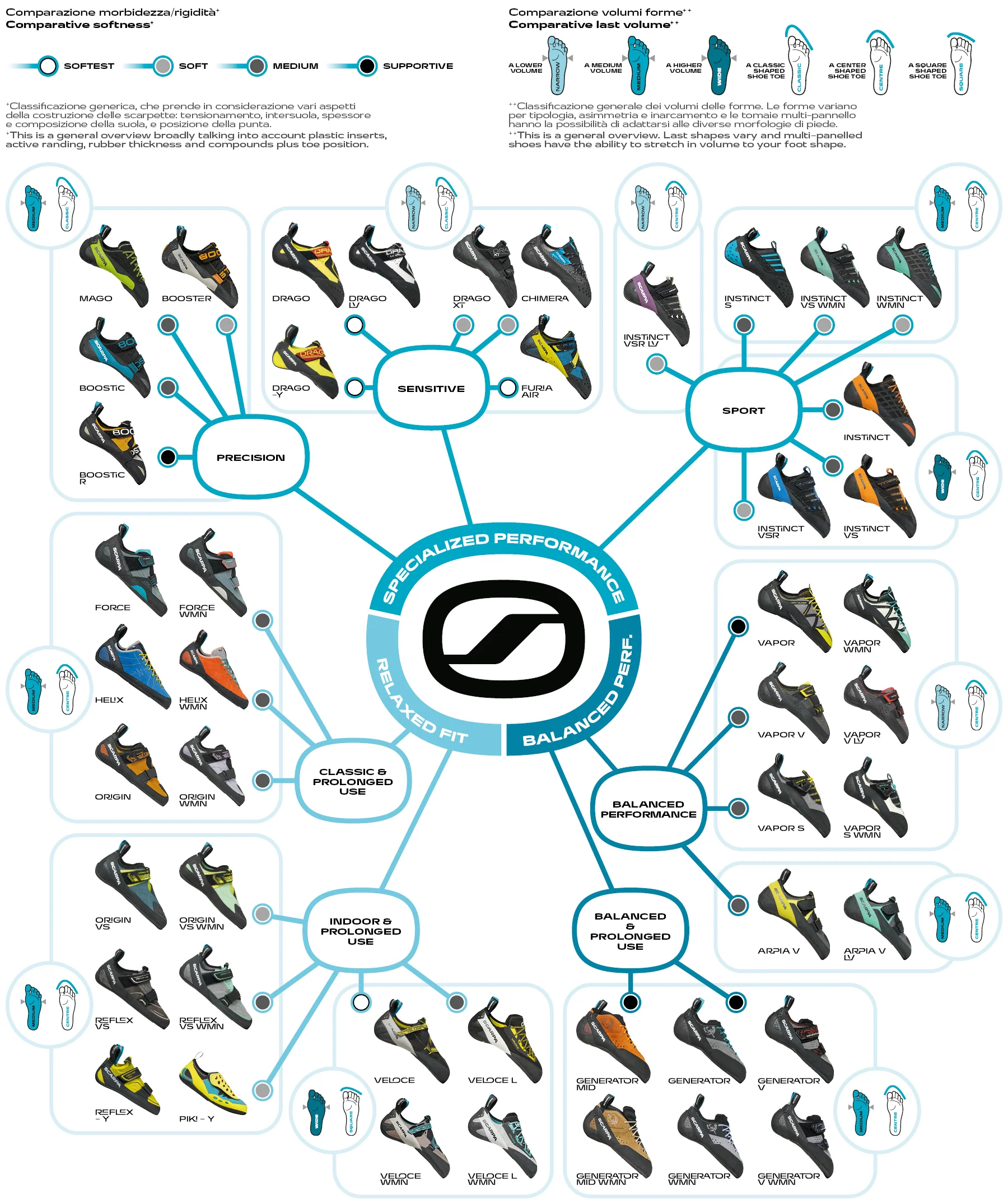
If you want to nerd out a bit more, here are three big brand charts you can open full screen or download and keep for later.