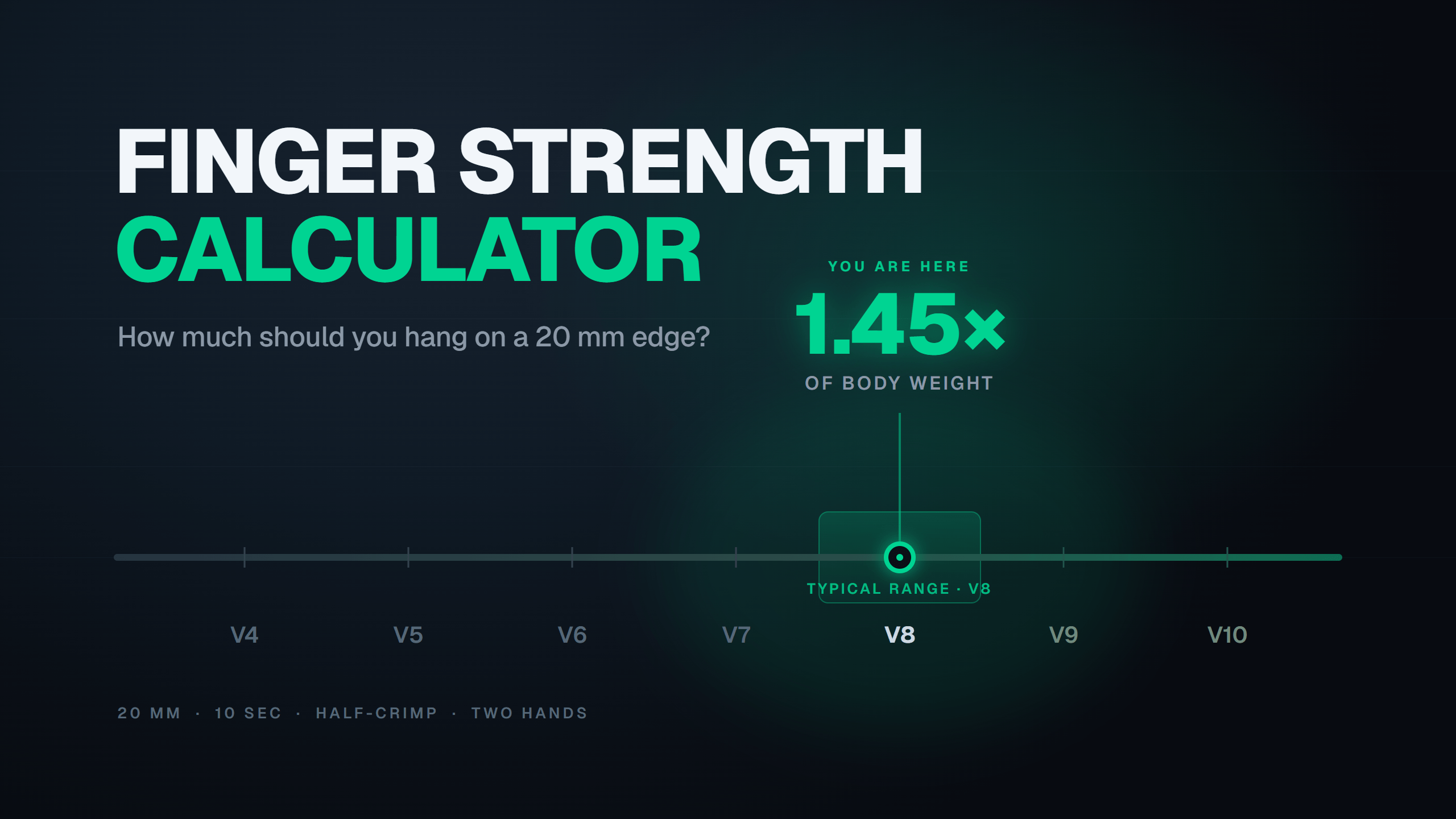
See how your max hang sits against the climbers who already climb the grade you are training for. It helps you tell whether your fingers are strong enough to get there.
Your result shows up here
Fill in the hang and hit Calculate. Nothing is sent anywhere - the maths runs in your browser and nothing is stored.
What your result actually tells you
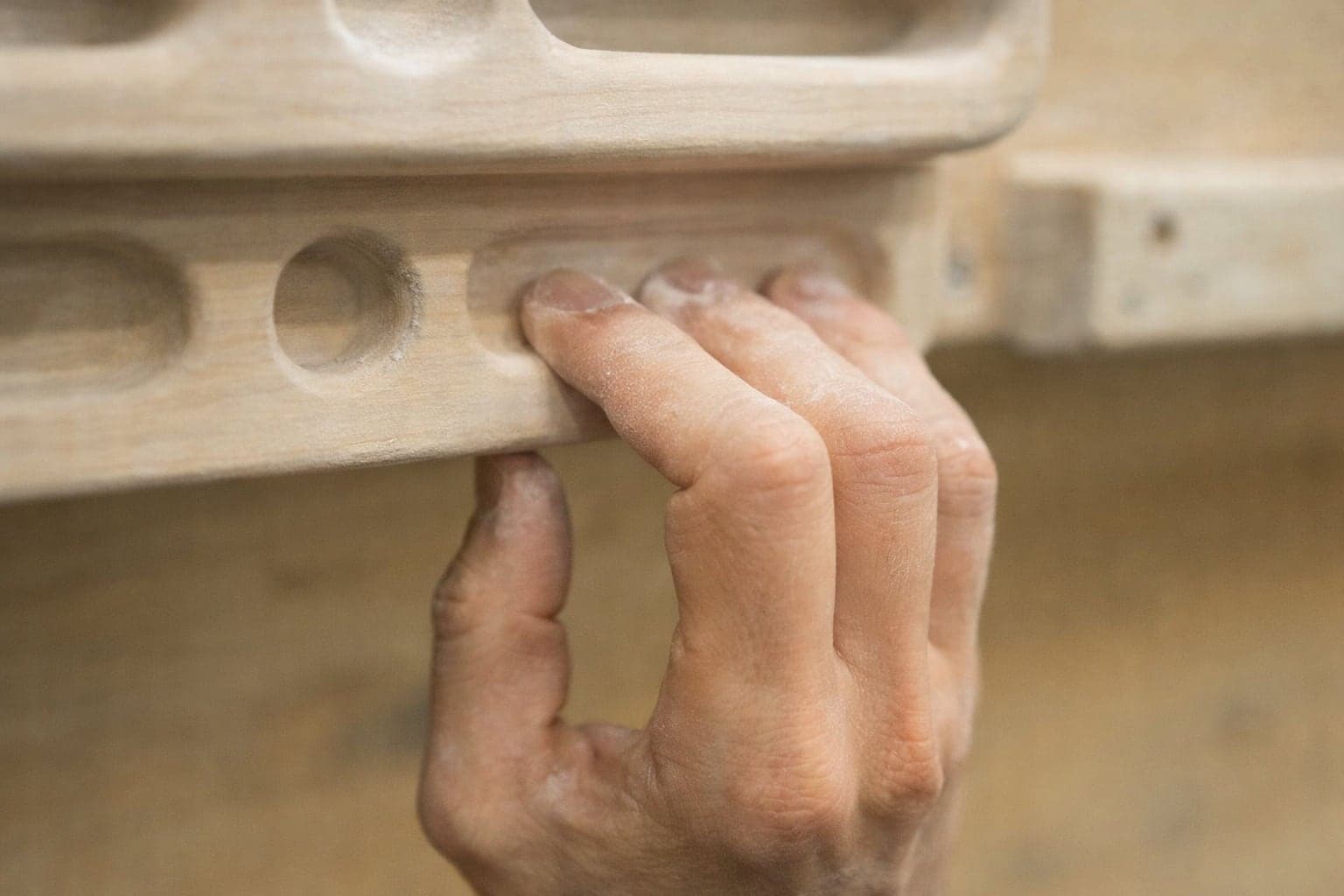
It measures one narrow thing, in isolation: how much you can hold in one grip, on two arms, for ten seconds, hanging still. It says nothing about catching a hold fast, holding slopers or pinches, or lasting to the top of a route. And even the strength it does show has to travel - through your shoulders, elbows and back - into an actual move. Plenty of climbers have it on the board and lose it on the wall, because it never got wired into the climbing.
So the tool answers one question, and it is not “what grade can I climb”. It is what grade your fingers are already strong enough for. If they are not there yet, that is your ceiling for now. If they are strong enough and you still are not climbing it, the honest question becomes why - because it is not your fingers.
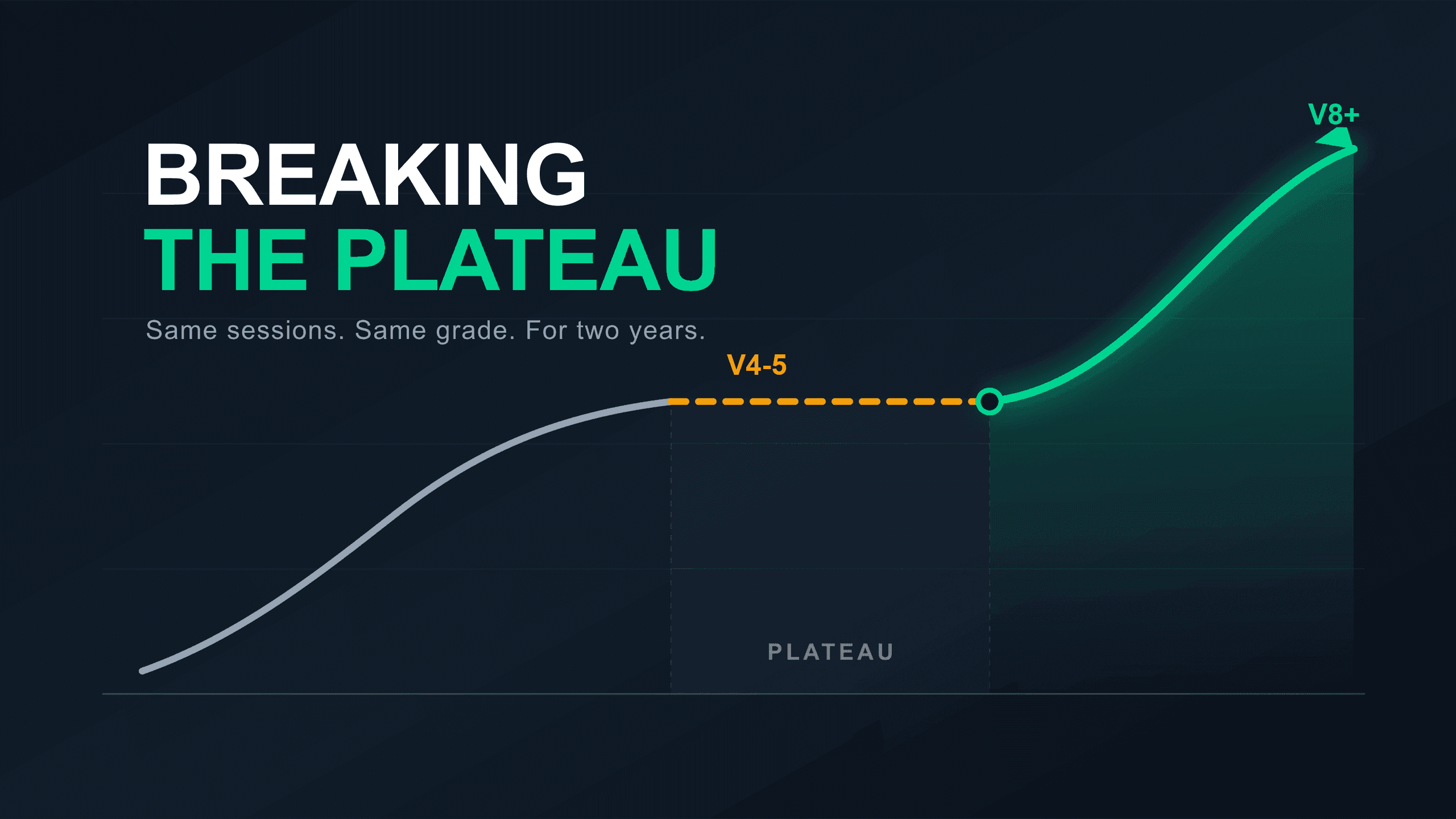
- Below their range. Fingers are probably one of the things in the way. Probably, because they are only ever part of it. Under a year or two of climbing the answer is still not a hangboard - it is more climbing. But if you have the mileage and you have sat at a grade for a long time, that is exactly when finger work earns a dedicated block.
- Inside their range. You already hang what climbers at that grade hang, so fingers are not what is stopping you. Read that narrowly: it does not mean you can climb it. The range describes who is there, not what it takes to get there. Keep hanging in a maintenance dose so you do not lose it, and put the real work somewhere else.
- Above their range. The strength is there in isolation, so heavy hangs are not the answer - another block will not move your grade. The real question is where it leaks out on the wall: shoulders, elbows, back, the links that carry finger force into a move, or endurance that fades before the top. That is climbing and movement, not more hanging.
Take the full quiz, get the full program.
Your grade, your schedule, your history, what hurts - the quiz maps it and a coach builds a program around it. From $16.
Start the free quiz